
Plan
Clarify intent and produce a governed plan
AI operational control plane
Aintlijx helps teams move AI from scattered copilots and scripts into governed agents, controlled workflows, scoped tools, and execution with reviewable audit evidence.
Teams are adopting copilots, agents, scripts, model APIs, MCP servers, and internal automations faster than platform teams can govern them. Aintlijx brings identity, permissions, workflows, tools, cost, observability, and audit into one operational control layer.
Design partners use one workspace: four studio tabs, plus AI Helper on every screen.
Clarify intent and produce a governed plan
Edit, terminal, and Composer — the only path that applies code changes
Project vaults, search, and cited context
Inspect what executed, what changed, and what it cost
Explains and suggests on every screen. It does not change your data. Deep insight can research the bound workspace. Code changes stay in Composer, inside Build.
One operational layer around the primitives production AI actually needs.
Governed identities with scoped execution
Structured, policy-aware automation paths
Controlled capabilities
Users, service accounts, and agent principals
Organization and workspace boundaries
Product-scoped roles and permissions
Vault-backed credential resolution
Model and capability usage visibility
Reviewable evidence
Aintlijx sits around agents, workflows, tools, and observability—not as another chat window on top of them.
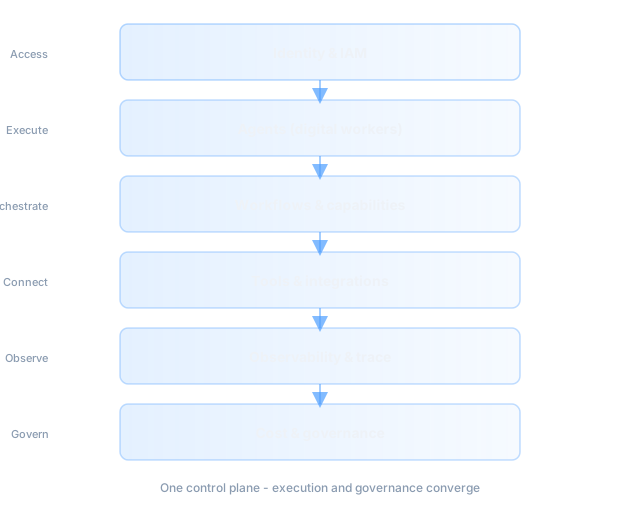
Platform layers — identity through governed execution.
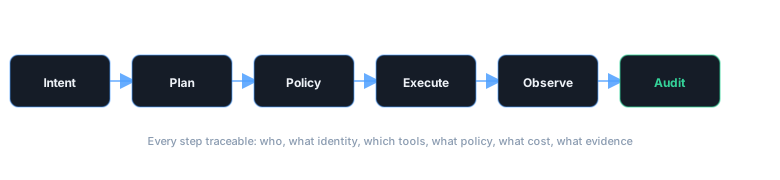
Intent → Plan → Policy → Execute → Observe → Audit
Every meaningful action should be traceable: who requested it, which identity executed it, which tools were used, what policy applied, what it cost, what changed, and what evidence was produced.
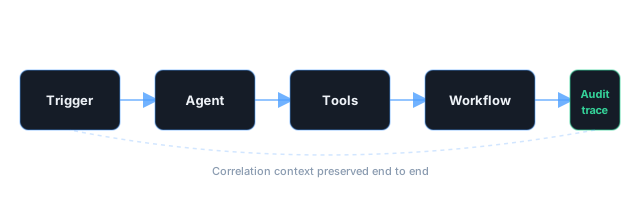
Correlation context preserved from trigger to audit.
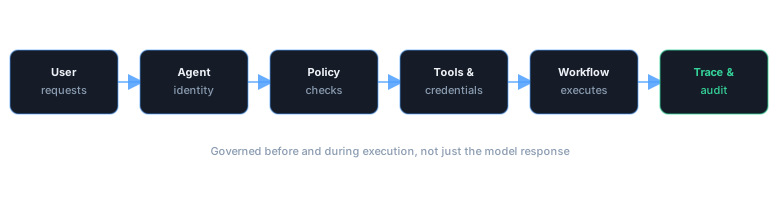
A user asks an agent to inspect a project, use approved tools, and produce a result. Aintlijx governs identity, policy, credentials, execution, and evidence—not just the model response.
| Typical AI app | Aintlijx control plane |
|---|---|
| Chat-first UX | Operations-first control layer |
| Fragmented logs after the fact | Correlated traces and audit evidence |
| Shared API keys | Identity-bound tools and credentials |
| Manual review bottlenecks | Policy-aware approval gates |
| Per-app permission silos | Tenant-aware, product-scoped RBAC |
Aintlijx treats tenancy, product access, environments, secrets, and execution boundaries as first-class platform concerns. Teams can model separation across customers, business units, workspaces, products, and environments, with single-tenant and multi-tenant deployment patterns built into the architecture.
Human users, service accounts, agents, workflows, tools, and product surfaces are governed through scoped identity and policy.
The customer workspace (Plan, Build, Knowledge, Runs, plus AI Helper) and future product surfaces share the same identity, tenancy, policy, workflow, and audit foundation—not separate permission models per app.